The Farm
Forty-seven acres in the foothills of northern El Salvador, nearly all of it forest sheltering coffee trees beneath a green canopy.
Shade grown coffee
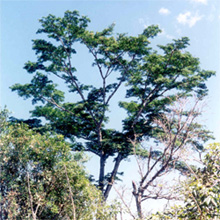
Shade-grown coffee means planting large trees to shelter the much smaller coffee trees beneath them. The shade protects the coffee from long periods of direct sun, and it makes the beans ripen more slowly, which enhances their flavor.
More importantly, those large trees provide a natural habitat for plants and animals — orchids, migratory birds and a great deal besides. Across much of the tropics natural forest is being destroyed at an alarming rate, with tremendous loss of biodiversity. This is especially true in El Salvador, where only 6% of the land is still forested, much of it on coffee farms.
Finca Santa Rosa is unusual in relying very heavily on mature forest cover established over a century ago and maintained ever since. Many other “shade coffee” farms offer only a few large trees here and there, particularly at higher altitudes where coffee needs less shade. We keep natural forest trees at a very high density — so dense that in places very little light penetrates to the forest floor.
Natural coffee
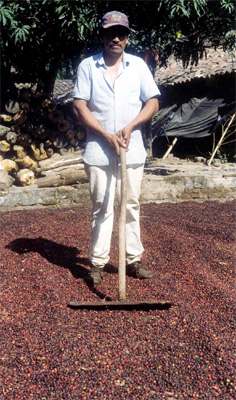
“Natural” describes how the coffee is processed after picking. We dry the whole cherries on large patios made of terracotta tiles. It takes about two weeks. The coffee is then shelled to remove the husk and release the beans.
The advantage is that the sweetness of the coffee fruit enhances the flavor of the coffee in the cup. By contrast, most commercial coffee is produced by fermenting the beans in tanks of water to remove the layer of fruit — a process that generates a great deal of waste water containing coffee pulp, which can cause pollution problems.
No pesticides, no artificial fertilizers
Neither is used on our farm, for three reasons. We do not want such chemicals ending up in the coffee we produce. Our farm is the source of many streams and springs used by local people, and we want them to be absolutely free of contamination. And we know that pesticides and artificial fertilizers have a destructive effect on the flora and fauna we are trying to conserve.
Because we do not plant coffee at high densities, we do not suffer much from pests in any case. When we do need to act, we can control the problem without chemicals. The coffee weevil is controlled by releasing parasitic wasps that attack it alone; any beans containing the weevil ripen weeks before the main crop and can be picked, boiled and discarded. Very occasionally a fungal disease appears on a coffee plant. We simply cut it off at the stem and burn the foliage. Although this seems drastic, new sprouts soon appear uninfected, and after a couple of years the tree is back to normal.
Bourbon
Bourbon is the original strain of coffee grown in Latin America. Today it is increasingly being replaced by strains that tolerate heavy inputs of chemical fertilizer and pesticide, and that grow uniformly enough to be picked by machine.
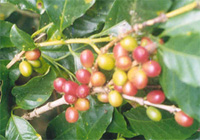
Bourbon is taller than the modern varieties — six to twelve feet — and more erratic and profuse in its growth. It also tends to produce heavily only once every two years. But it is the variety most connoisseurs of coffee seek out. At Finca Santa Rosa over 95% of our coffee trees are Bourbon, and many of them are decades old.
Where we are
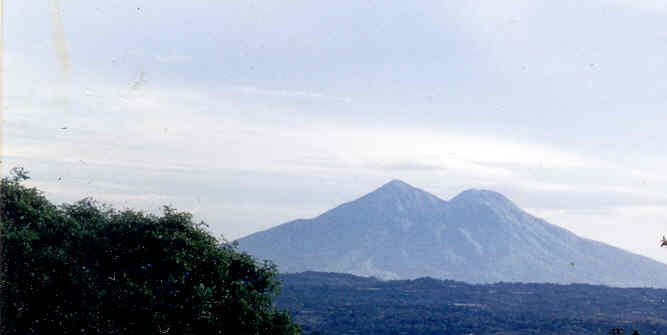
Finca Santa Rosa lies about 2 km north of the town of Ilobasco, in the Department of Cabañas. The area is called Sitio Viejo — “the old site”.
The name is literal: our farm stands where the old town of Ilobasco used to be, before it was moved to its present location over 150 years ago. No trace of the old town remains, and it is astonishing to think that any human settlement could ever have existed beneath the rich, dense and peaceful tropical forest that grows there today.